

During my time at INVNT.ATOM, I collaborated with creatives, project managers, vendors, and clients such as Emirates, Levi's SEA, and Xero.
I contributed internally in the following ways:

Designed components and mockups, prepared AR prototype and mixed audio for reveal videos showcased at Dubai Airshow.
Redesigned wireframes, created components, and prepared poster variations for Xerocon's AI Music Factory activation.
Facilitated developer handoff by translating Illustrator art boards to Figma frames, and assisted on-site accreditation for vendors.
Ensured visual consistency across pitch deck, scheduled client meetings, and created contact reports.
Slack was sufficient for daily conversations but important updates and links would often slip under the radar. The project managers used Monday for task tracking and documentation but the wider team abandoned it due to its steep learning curve. We needed a better tool for seamless collaboration between our team members based in Sydney, Dubai, London and Singapore.
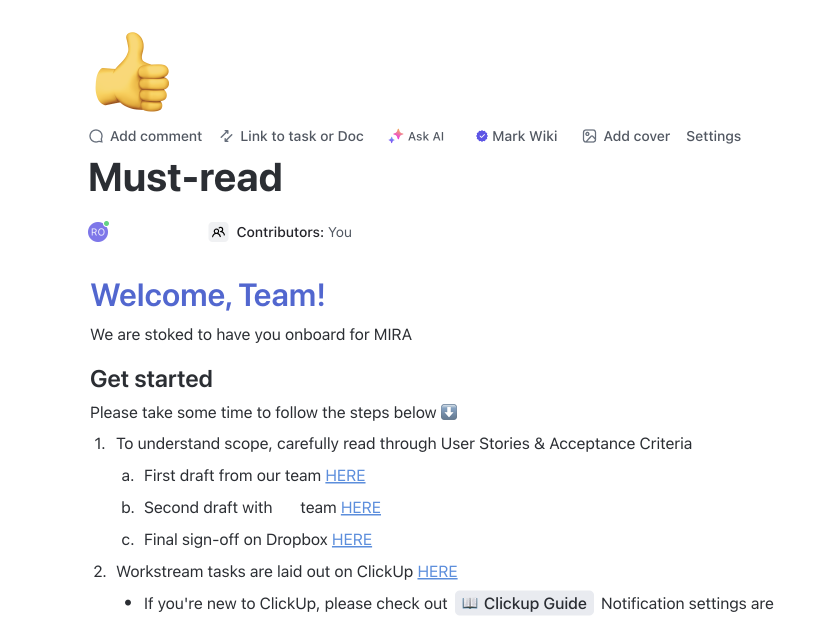
I was responsible for researching alternatives and gathering details like pricing, guest access and security features. The senior project manager and I extensively tested new platforms every week before we found our solution in ClickUp.

✅ Notion-like docs to centralize knowledge
✅ powerful PM features from platforms like Asana
✅ as easy-to-use as Todoist to ensure wider adoption
Once we received the green light from IT, we prepared a step-by-step guide to onboard users. I created a task as well with checklists to familiarize the team with the key features of the platform.
We imported data from Monday and added active projects with detailed breakdowns. Additionally, we created project wikis to capture everything from background information and client feedback to status updates and relevant links for assets and documents.
ClickUp was received positively by our team and quickly became a vital aspect of our workflow.
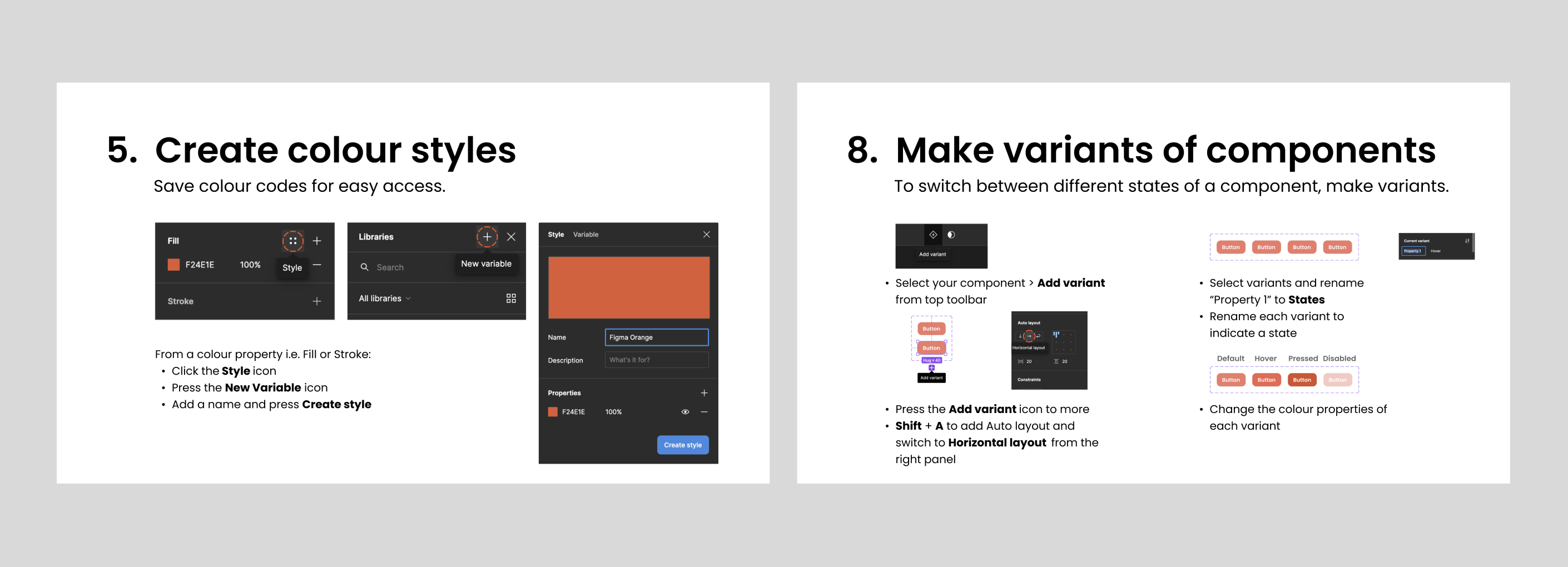
Messy layers in a project file or deliverables not following the naming convention always led to confusion and frustration during handovers.
To make everyone's life easier, I reached out to designers and compiled useful tips and best practices for Adobe apps, Figma, and even Slack. Followed by approval from senior directors, these guidelines were shared with the wider team.
At the time, our team had just switched from Miro to Figma. I was tasked with creating a brief crash course which covered the basics (e.g. frame vs group, text/color styles) and slightly more advanced concepts (e.g. branches, creating button component/variants).
As a result, the team felt more comfortable using Figma and appreciated the best practices document.

During brainstorming sessions, I actively contributed ideas to the creative team and performed research, if needed. In preparation for 2024 pitches, I explored the use of metaverses in retail, media, travel, airline, and construction industries. My findings, which were backed by credible sources, helped inform the team's strategy as they approached clients.
I supported the team with preparing pitch decks as well. To ensure visual consistency, I checked the typography, colors, headers, etc. across the slides. Furthermore, I leveraged GenAI platforms to produce images and videos which would bring our team's ideas to life. These visuals strengthened our pitch as they allowed potential clients to visualize niche use cases (e.g. a VR training simulator for oil rig workers).
I supported the PM team with onboarding and offboarding vendors.
To set expectations, I drafted briefs and SOWs which clearly mapped out timeline and deliverables.
As a primary point of contact for vendors, I solved any queries and facilitated the invoicing procedure.
I uploaded files promptly to cloud storage with the approved naming convention.
For easy access, I categorized each asset and document into subfolders.
Additionally, I maintained a record of folder and platform access shared with externally.
After closing projects, I created a retrospective survey with open-ended questions to collect feedback from internal and external teams.
With the responses, the senior project manager and I identified gaps and collated actionable recommendations for management.
